What Is Conversion Rate Optimisation (CRO)? A Plain-English Guide for Business Owners

CRO in plain English: what a conversion rate is, how to calculate it, how the process works, and where most businesses find their quickest wins.
Conversion rate optimisation (CRO) is the practice of increasing the percentage of website visitors who take a valuable action — submitting an enquiry, booking a call, buying, or signing up — by understanding why people hesitate and testing changes that remove that hesitation.
Instead of paying for more traffic, CRO helps you get more results from the traffic you already have.
What is a conversion rate?
Your conversion rate is the share of visitors (or sessions) who complete a goal:
Conversion rate = conversions ÷ visitors × 100
If 4,000 people visit your site in a month and 60 submit an enquiry, your enquiry conversion rate is 1.5%. Lifting it to 2% gives you 80 enquiries — a third more — with the same marketing spend.
What counts as a conversion?
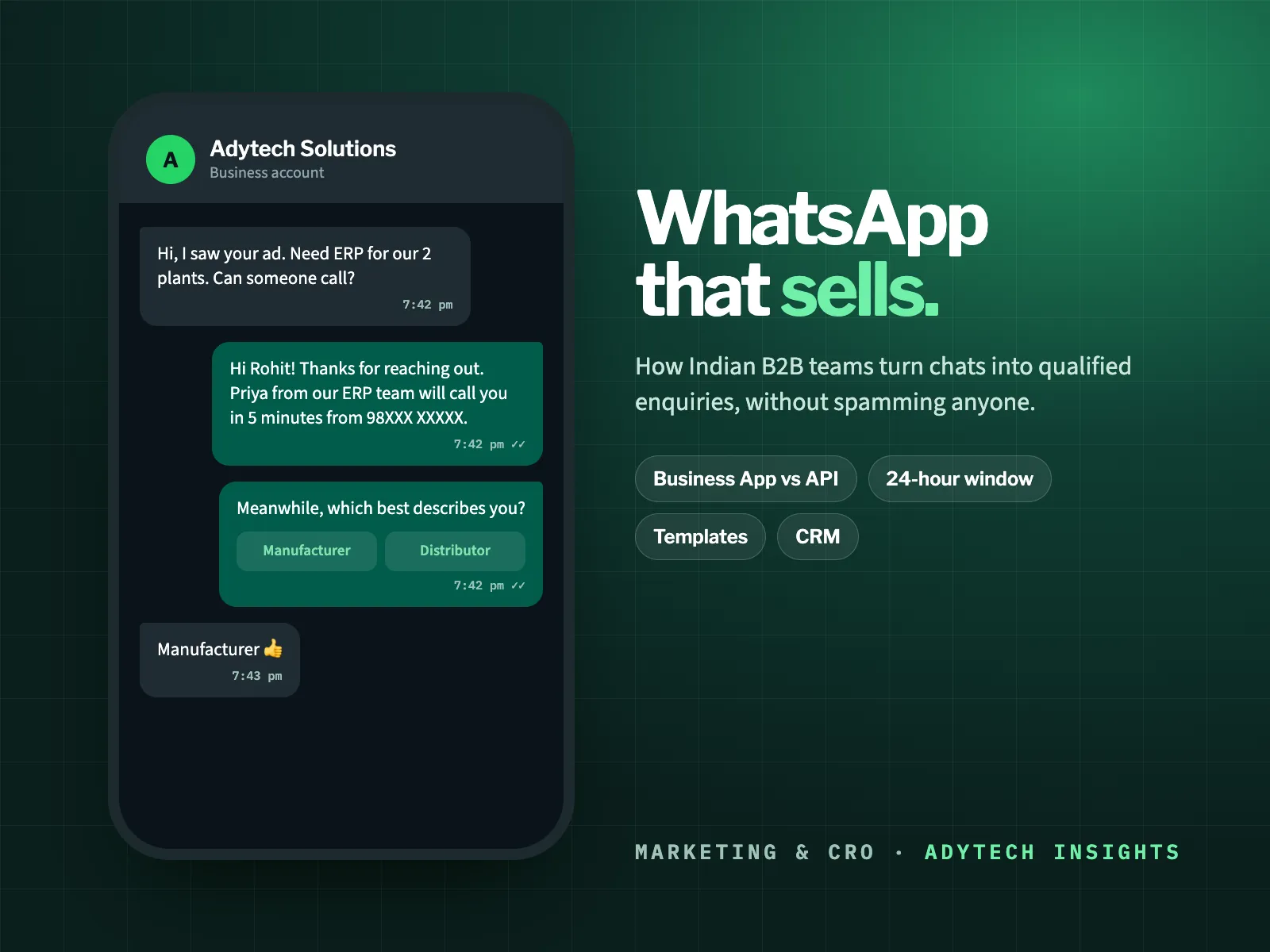
Anything that moves a buyer closer to revenue: enquiry or quote forms, call-back requests, tap-to-call and WhatsApp clicks, demo bookings, purchases, downloads or sign-ups. For B2B businesses, track qualified conversions too — the enquiries that become real opportunities.
How CRO works, step by step
- Measure correctly. Set up analytics and conversion tracking so you trust the numbers.
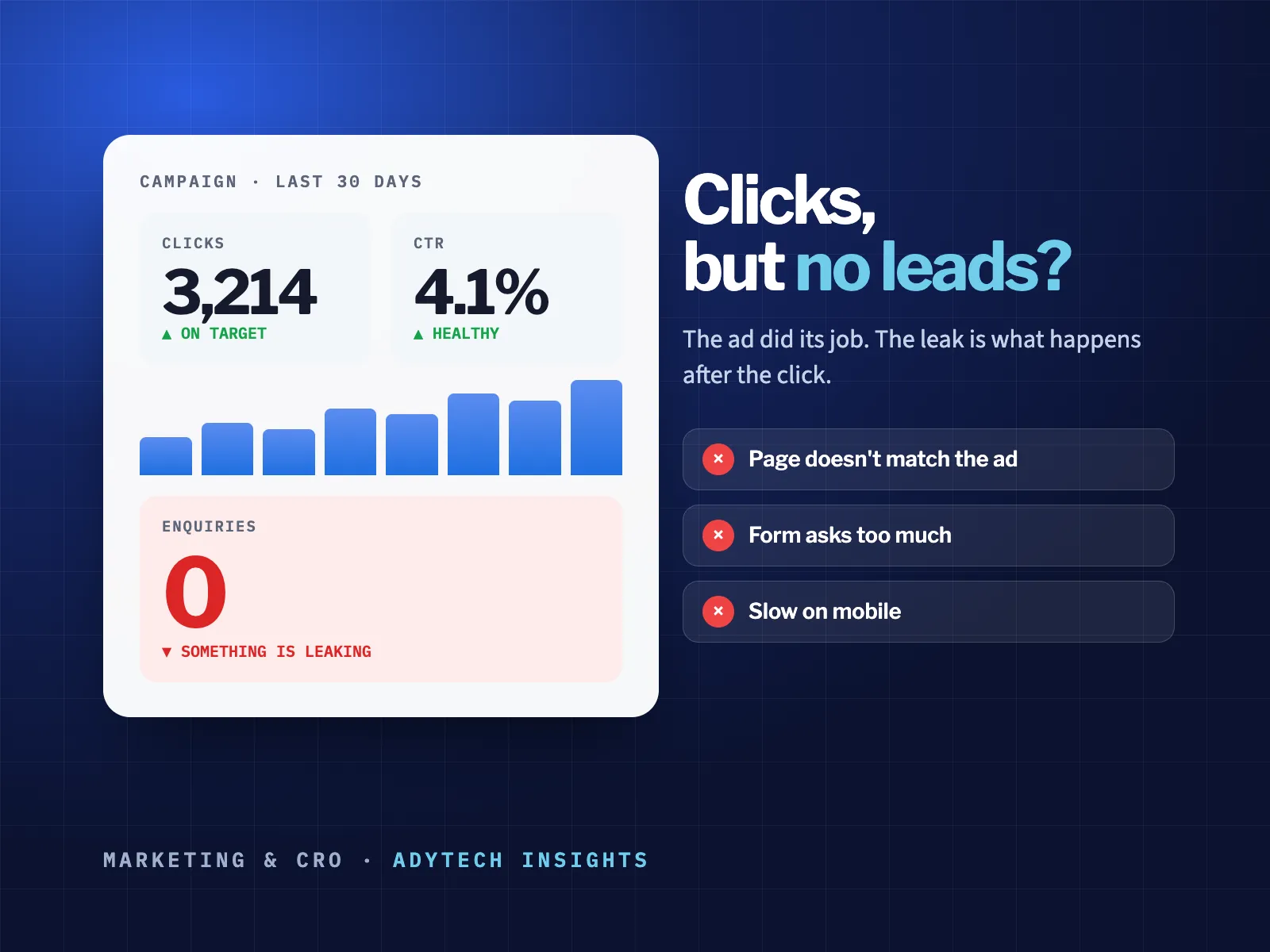
- Find where people drop. Look at the funnel: which pages and steps lose the most visitors.
- Understand why. Use heatmaps, session recordings, surveys and customer conversations.
- Prioritise ideas. Rank fixes by expected impact, confidence and effort.
- Test. Run A/B tests where traffic allows; otherwise ship clear improvements and compare periods.
- Roll out and repeat. Keep what wins, learn from what doesn’t, and move to the next bottleneck.
Where the quickest wins usually are
- Message match between ads or search queries and the landing page
- A clear primary action in the first screen of every key page
- Shorter forms that ask only what you need first
- Trust signals — reviews, client names, results — next to the form
- Tap-to-call and WhatsApp on mobile
- Speed — slow pages lose visitors before they read anything
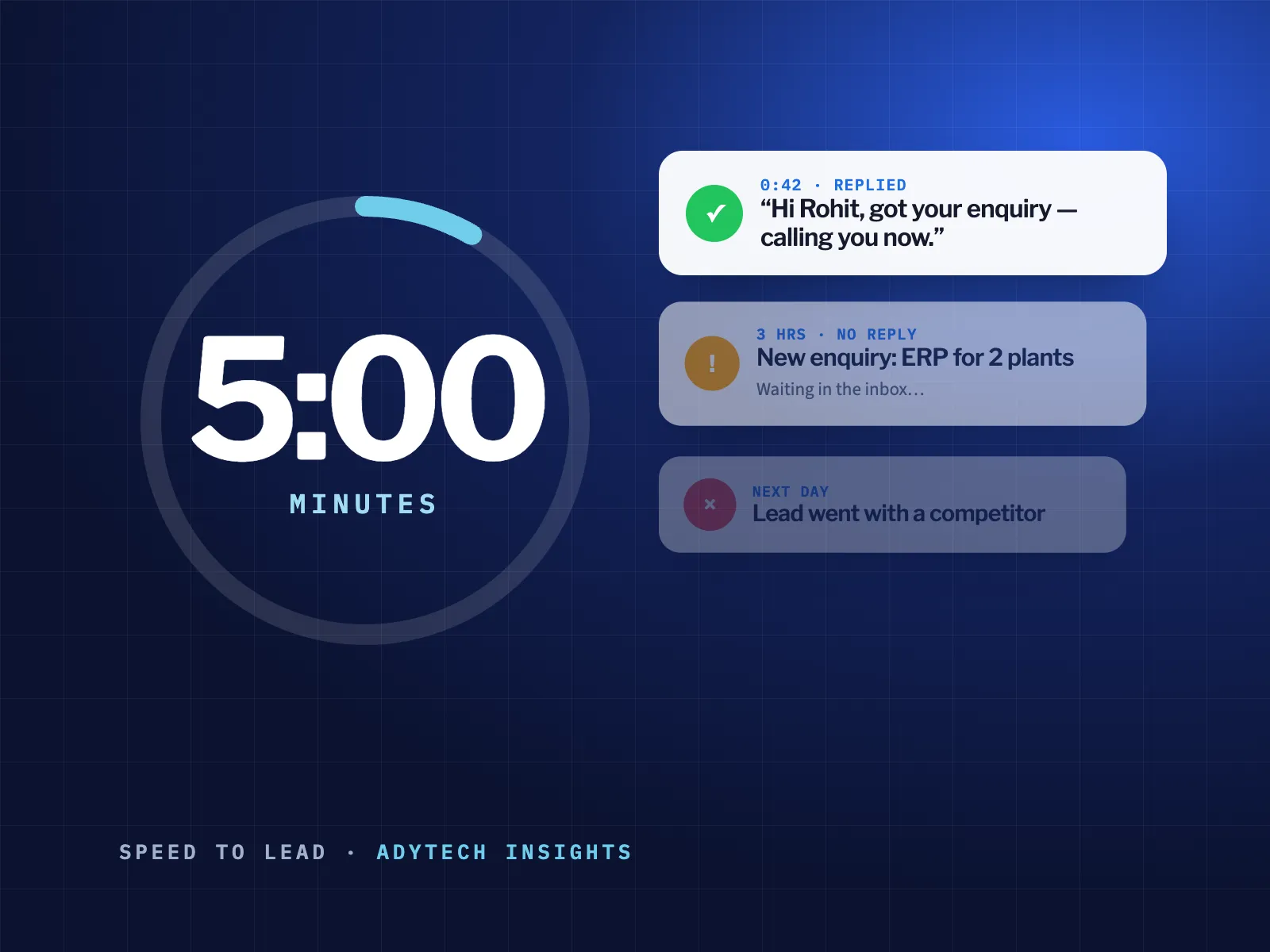
- Follow-up speed — replying within minutes rather than hours
CRO vs SEO vs paid ads
SEO and ads bring visitors; CRO decides how many of them become customers. They multiply each other: a better-converting site makes every rupee of SEO and advertising worth more.
Frequently asked questions
What is a good conversion rate?
It depends heavily on industry, offer, traffic source and what you count as a conversion. Compare against your own past performance and your funnel stages rather than generic benchmarks, and improve step by step.
Do I need a lot of traffic for CRO?
You need enough conversions for A/B tests to be statistically reliable. Lower-traffic sites can still gain a lot from research-led fixes and bolder changes measured over time.
How long does CRO take to show results?
Quick fixes such as clearer calls to action, shorter forms and tap-to-call can show results within weeks. A testing programme compounds over months.
What tools are used for CRO?
Typically an analytics tool such as Google Analytics 4, a tag manager, a behaviour tool for heatmaps and recordings, and an A/B testing tool — plus your CRM to follow leads through to revenue.
How do I start?
Run a quick diagnosis first. Our free website growth audit checks conversion basics alongside SEO, AI search readiness and speed, or see our CRO audit for an in-depth review.