Speed to Lead: Why the First 5 Minutes Decide Whether an Enquiry Becomes a Customer
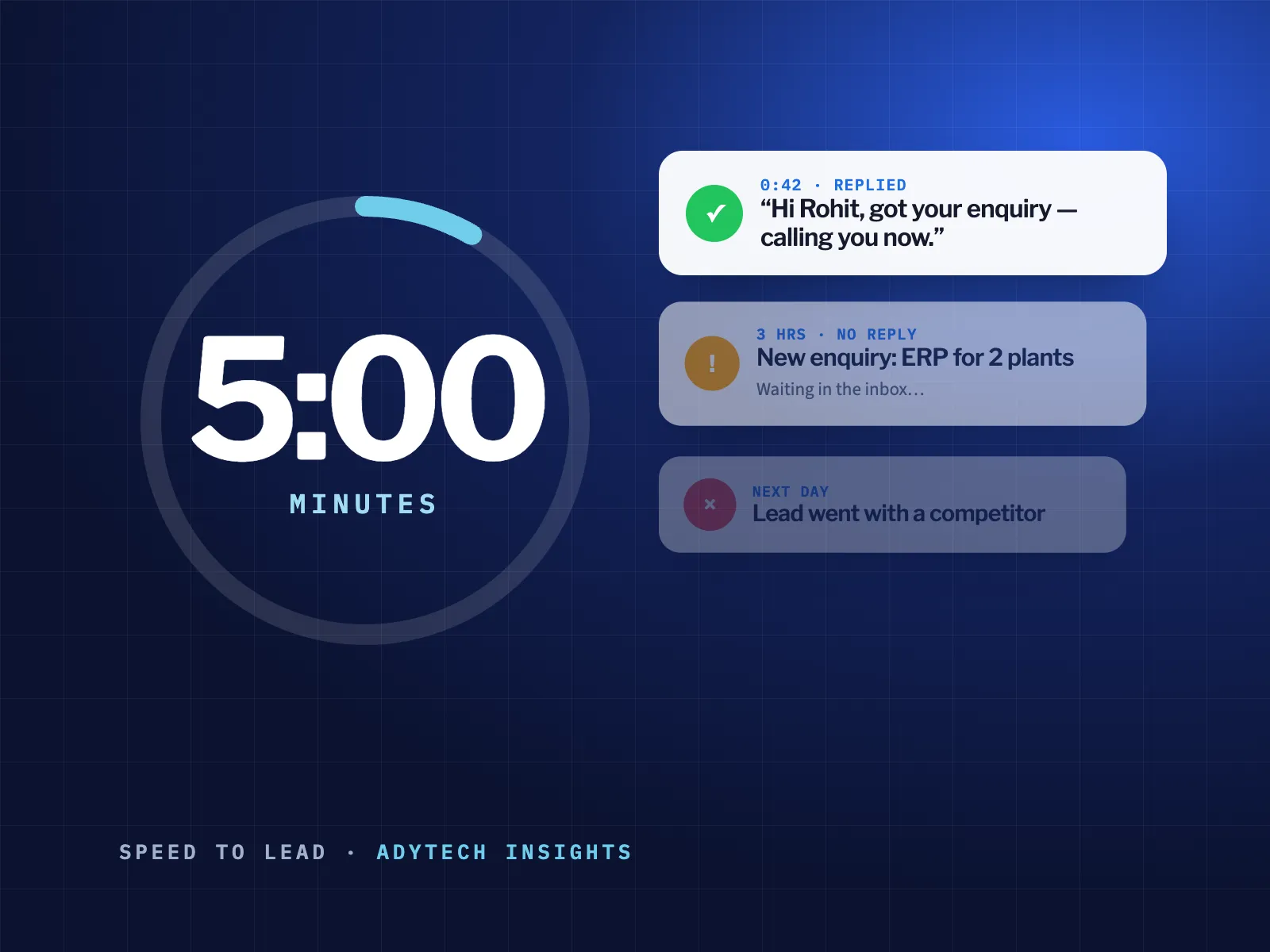
You paid for the click, the visitor filled the form — and then the enquiry sat in an inbox until after lunch. Here is why lead response time quietly decides your conversion rate, and a simple playbook to fix it this week.
A director at a mid-sized manufacturing firm once told us their website "doesn't bring serious leads". We asked to see the last thirty enquiries. Most of them were serious. A plant head looking for production planning software. A distributor with three warehouses. A school group asking about fee management.
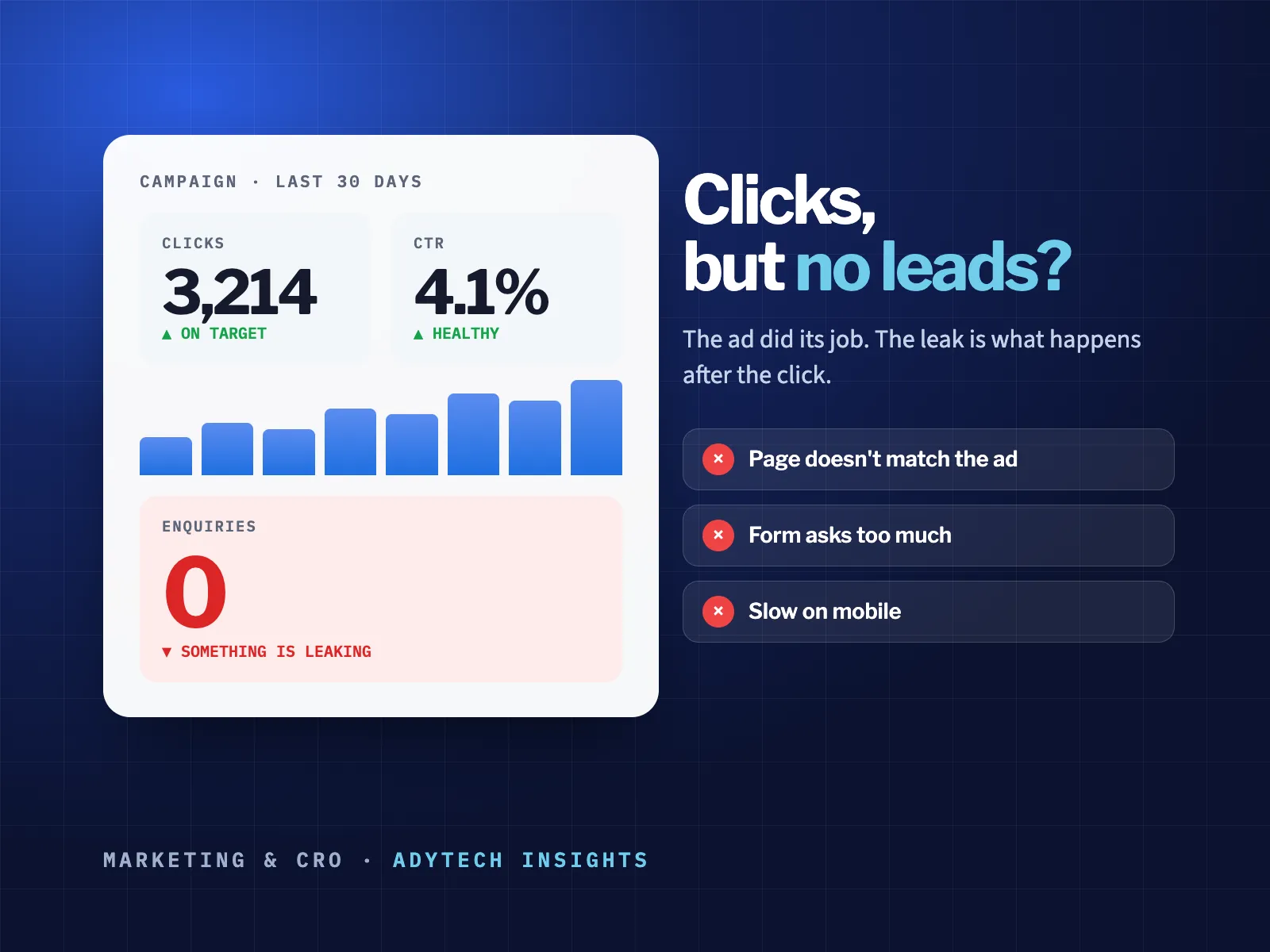
The problem wasn't the leads. It was what happened after the form was submitted. The enquiries landed in a shared inbox that one person checked "when there was time". The median first reply was the next working day. By then, half the people who had enquired had already spoken to someone else.
This is the least glamorous part of growth, and probably the most profitable. It has a name: speed to lead.
What is speed to lead?
Speed to lead is the time between a prospect raising their hand — filling a form, sending a WhatsApp message, calling, or replying to an ad — and a real person from your business responding to them.
Not an auto-reply. Not "we will get back to you within 48 hours". A human conversation.
It matters because interest has a half-life. The moment someone enquires is the moment they are thinking about the problem, have time set aside for it, and are probably comparing two or three options. Every hour after that, the problem drifts back down their to-do list and a competitor gets a chance to call first.
What the research says (and what it doesn't)
The most quoted study on this is "The Short Life of Online Sales Leads", published in Harvard Business Review in 2011. The researchers audited more than 2,200 US companies by submitting web enquiries and timing the response. Three findings stand out:
- The average first response took 42 hours, and almost a quarter of companies never responded at all.
- Firms that tried to contact a lead within an hour were nearly seven times as likely to qualify it as firms that waited even one hour longer.
- They were more than 60 times as likely to qualify the lead as companies that waited 24 hours or more.
That study is American and more than a decade old, so treat the exact multipliers with care. But in our experience working with Indian B2B companies, the direction holds, and if anything it is sharper here. Buyers now enquire on their phones, often from WhatsApp-heavy routines, and they expect a reply in the same rhythm as their other conversations.
The honest takeaway is not "five minutes is magic". It is this: the first business to have a real conversation usually sets the agenda for the whole sale. Speed is how you become that business.
Why most companies are slow (it's rarely laziness)
When we look at slow response times, the cause is almost always the system, not the people.
- Nobody owns the lead. Enquiries go to info@ or a shared inbox. Everyone assumes someone else has replied.
- The alert goes to the wrong place. The form emails a mailbox that sales staff don't keep open on their phones.
- Leads arrive outside office hours. A large share of B2B enquiries come in the evening or at weekends, when the owner is finally sitting with the laptop.
- The first reply requires preparation. Sales feels they need a quotation or a proposal before they can call. So they wait until they have one.
- There's no follow-up rule. One missed call and one email, then the lead is quietly forgotten.
None of these need a big budget to fix. They need a few clear rules and the right alerts.
The speed-to-lead playbook
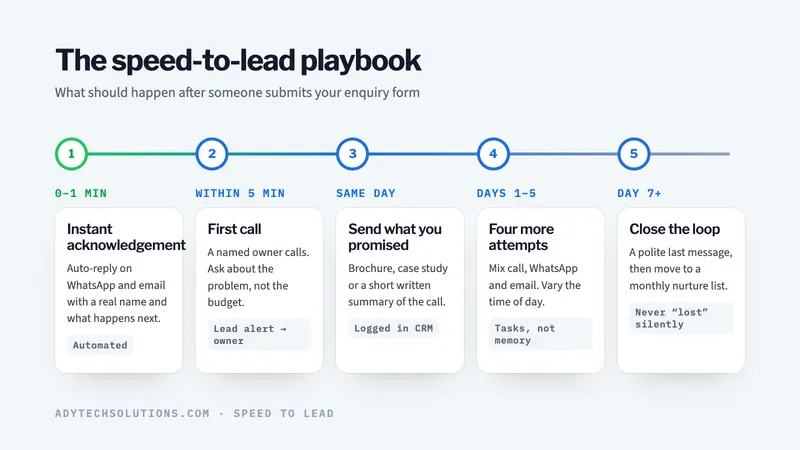
Here is the sequence we set up for clients. It works whether you get five enquiries a week or five hundred.
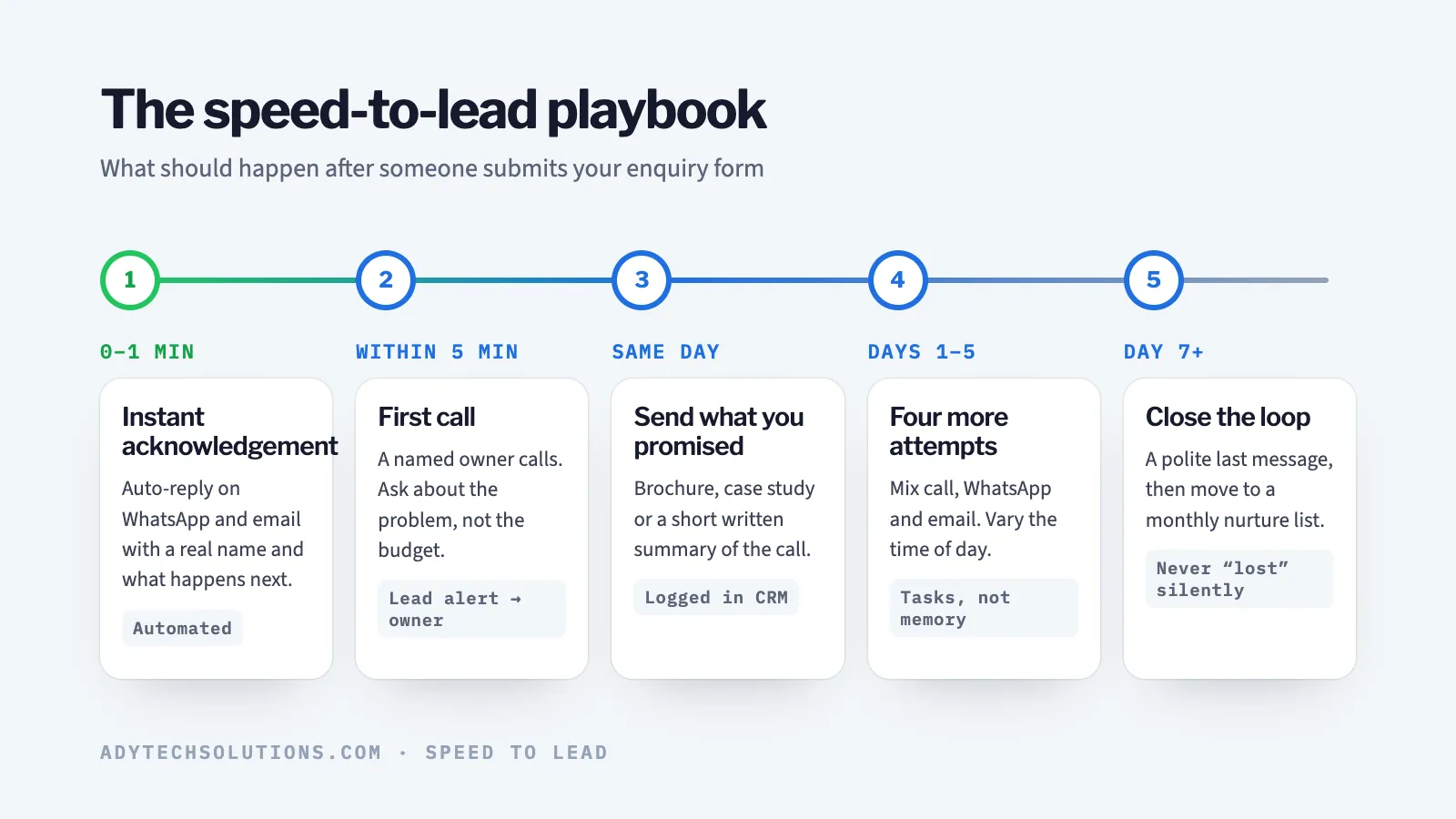
1. Acknowledge instantly (0–1 minute)
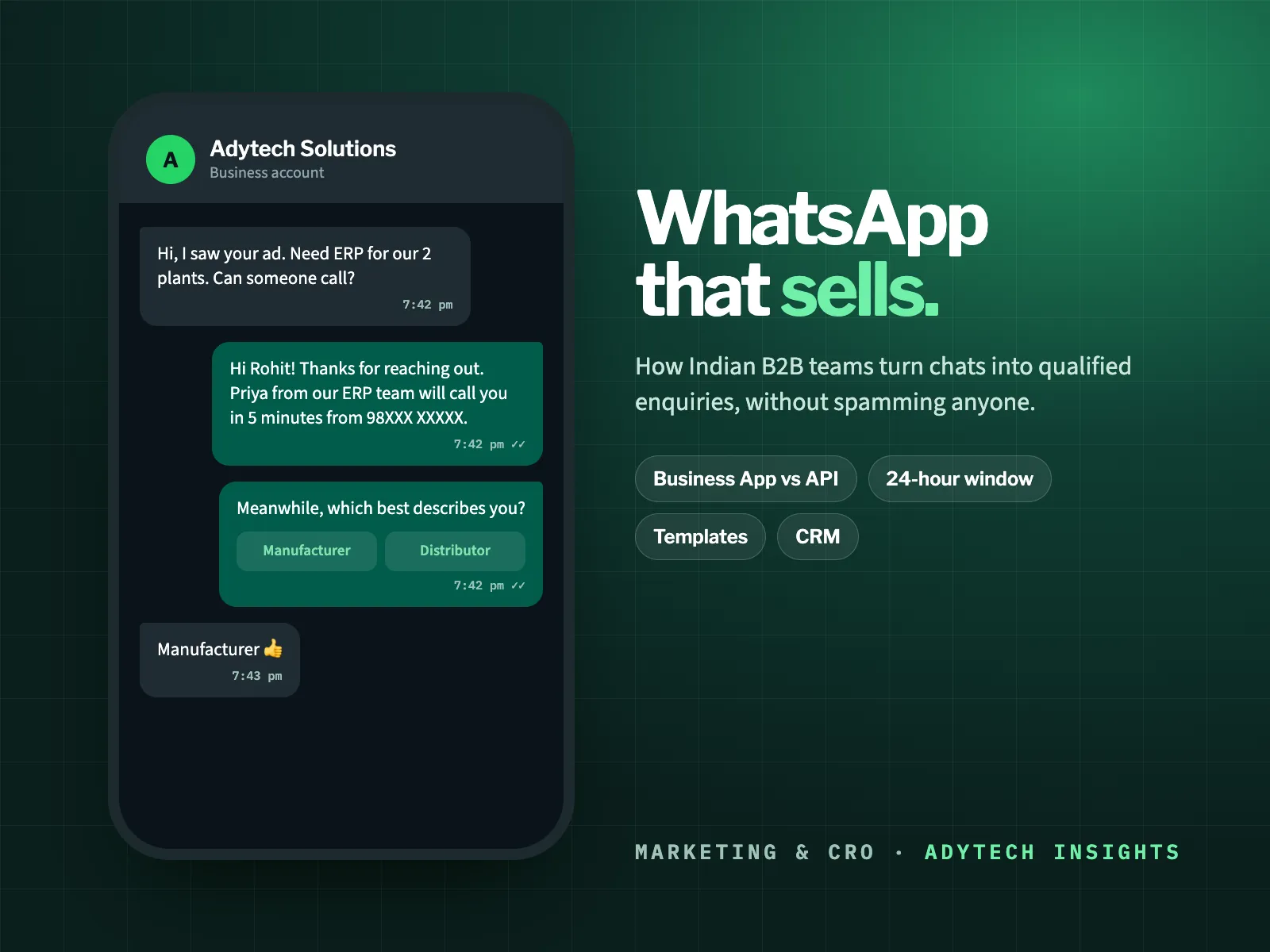
Send an automatic WhatsApp message and email the moment a form is submitted. Make it sound like a person, because it comes from one:
"Hi Rohit, this is Priya from Adytech. Thanks for your enquiry about ERP for your two plants. I'll call you in the next few minutes from 98XXX XXXXX. If now isn't a good time, just reply with a time that suits you."
This one message does three things. It confirms the enquiry reached a real business, it tells them who will call and from which number (so they pick up an unknown number), and it gives them an easy way to reschedule.
2. Make the first call within 5 minutes
The person who owns the lead should get an alert on the device they actually look at: a WhatsApp group, Telegram, or a mobile push from your CRM. Email alone is too slow.
On the first call, don't pitch and don't ask about budget. Ask about the problem:
- What made you look for this now?
- What are you using today, and what is not working?
- Who else is involved in the decision?
- What would a good outcome look like in six months?
Ten minutes of good questions is worth more than a polished brochure sent the next day.
3. Send what you promised, the same day
If you offered a case study, a demo slot or a short written summary of the call, send it before the day ends. Log the conversation in your CRM while it's fresh. This is where most teams lose momentum: a great first call followed by silence for a week.
4. Plan for four more attempts over five days
Many people won't pick up the first call. That's normal, not a "no". Plan at least four more attempts over the next five working days and mix the channels:
| When | Channel | What to say |
|---|---|---|
| Day 1, afternoon | Call | Second attempt at a different time of day |
| Day 2 | A short, useful note — not "just following up" | |
| Day 3 | Call + email | Offer two specific time slots |
| Day 5 | One relevant example or case study |
Put these attempts in your CRM as tasks, so they don't depend on someone's memory.
5. Close the loop, and never lose a lead silently
After a week with no response, send one polite, final message: "I don't want to keep messaging if the timing isn't right. Should I check back next quarter?" You will be surprised how often this is the message that gets a reply.
If there's still nothing, move the lead to a monthly nurture list. It isn't lost, it's parked.
What to measure
You can't improve speed to lead if you can't see it. Track four numbers every week:
- Median first-response time, from form submission to the first human contact. Use the median, not the average: one lead left for three days hides inside an average.
- % of leads contacted within 5 minutes during working hours, and within an hour outside them.
- Contact rate: the share of leads where you actually spoke to someone.
- Lead-to-meeting rate: the share of leads that turned into a proper discussion or demo.
Most CRMs can show the first two automatically if every lead goes in with a timestamp. If yours can't, a simple Google Sheet with "received at" and "first contact at" columns will do for the first month.
The tools you need (probably fewer than you think)
You don't need an expensive sales stack. For most Indian B2B companies, this is enough:
- A form that sends data straight to a CRM, not just to an inbox.
- Instant alerts on the phone of the person who owns the lead, through WhatsApp, Telegram or the CRM's app.
- WhatsApp Business, ideally through the WhatsApp Business API, so automatic acknowledgements and templates are possible and conversations are visible to the team.
- Round-robin or rules-based assignment, so every lead has exactly one owner the second it arrives.
- Follow-up tasks created automatically for days 1, 2, 3 and 5.
If you are working out which CRM to start with, our guide on CRM vs ERP — which does your business need first is a good starting point.
Common mistakes we see
- Treating every lead the same. A "pricing" enquiry from a 200-person manufacturer deserves a faster, more senior reply than a newsletter signup.
- Asking for too much on the form. Every extra field slows the enquiry and adds nothing the first call wouldn't uncover. Name, phone, and one line about the need is usually enough.
- Hiding the phone number. If people can't call you, they can't reach you fast, and neither can you reach them without a valid number.
- Automating the human part. Chatbots and auto-replies are excellent for acknowledging and booking. They are poor at building trust. Keep a person in the first real conversation.
A quick self-check
Try this today: fill in your own website's enquiry form from a personal email and phone number, at 7 pm. Note how long it takes for someone to contact you, how they contact you, and whether they know what you asked for.
Then run your page through our free CRO audit to see whether the form, the phone link and the WhatsApp button are making it easy for visitors to reach you in the first place.
Frequently asked questions
What is a good lead response time for B2B?
Aim to have a real person contact the lead within 5 minutes during working hours, and within an hour outside them. Research such as the 2011 Harvard Business Review study on online sales leads shows the chance of qualifying a lead drops sharply after the first hour.
Is an automatic email reply enough?
No. An automatic WhatsApp or email acknowledgement is a good first step because it confirms the enquiry was received, but it doesn't count as a response. The lead is only "contacted" when a person has a conversation with them.
How many times should we follow up with a lead who doesn't answer?
Plan at least five attempts over about a week, mixing calls, WhatsApp and email at different times of day. Then send one polite closing message and move the lead to a monthly nurture list rather than deleting it.
What if we get enquiries at night or on weekends?
Send an instant acknowledgement that sets a clear expectation ("we'll call you at 10 am tomorrow"), and keep that promise. For high-value enquiries, consider an on-call rota or a WhatsApp alert to a senior person so the best leads get a same-evening reply.
Which tools help improve speed to lead?
A CRM that captures every enquiry with a timestamp, instant alerts on the lead owner's phone, the WhatsApp Business API for acknowledgements and templates, automatic lead assignment, and scheduled follow-up tasks. Most growing companies already own some of these and just need them connected.
Want help setting this up? Adytech connects forms, WhatsApp, CRM and lead alerts so every enquiry gets a fast, human reply. Book a free consultation and we'll review how your enquiries are handled today.
Cite or embed this article